
When the winter rains returned to rural western Washington in December 2025, they did not arrive quietly.
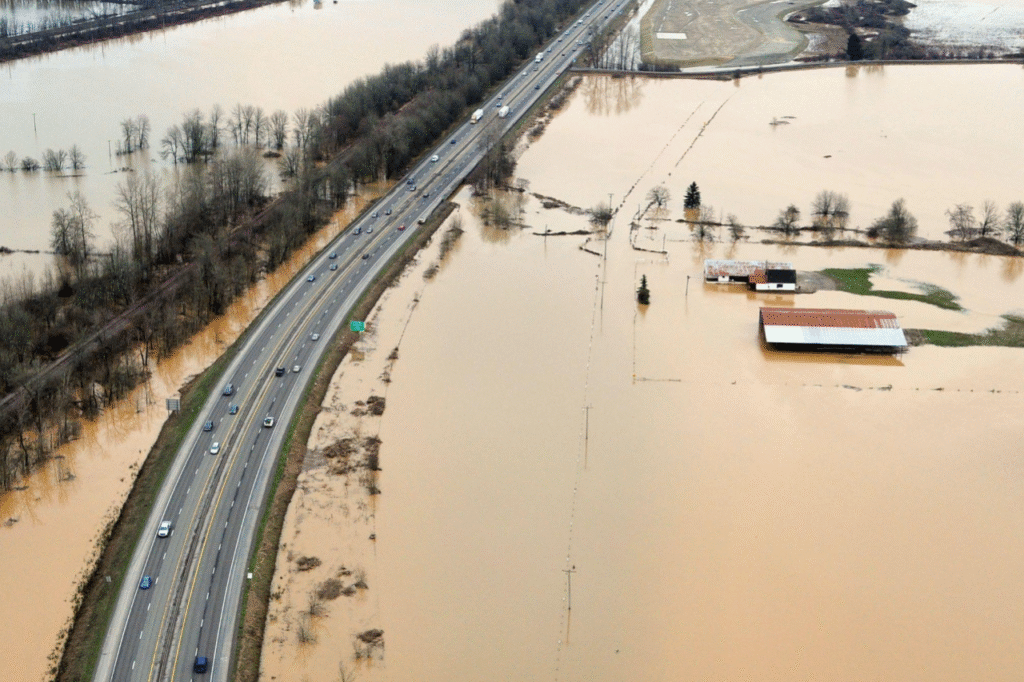
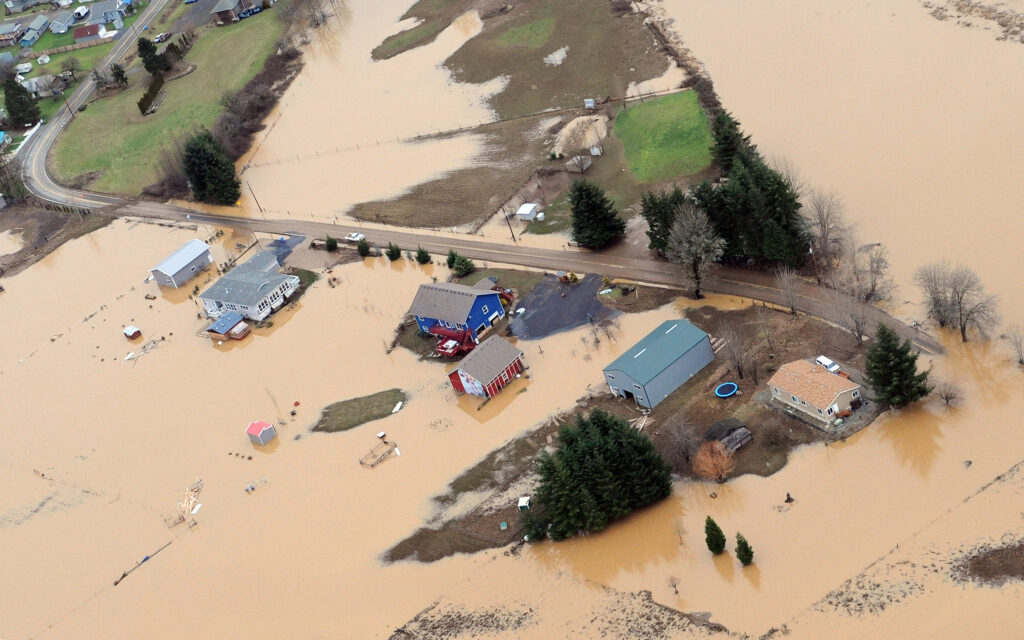
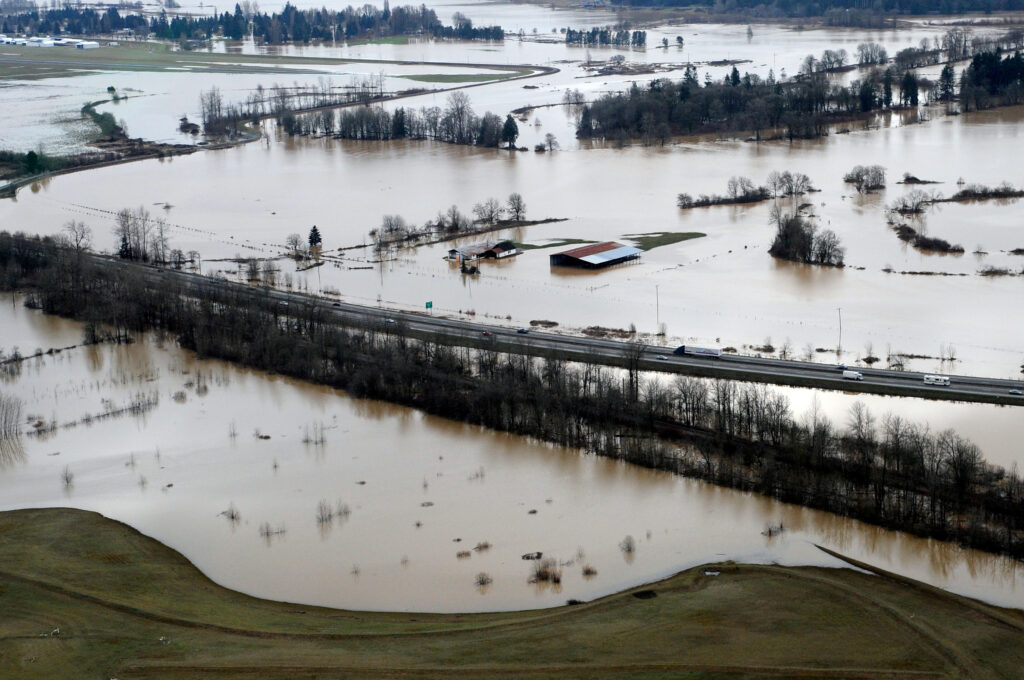
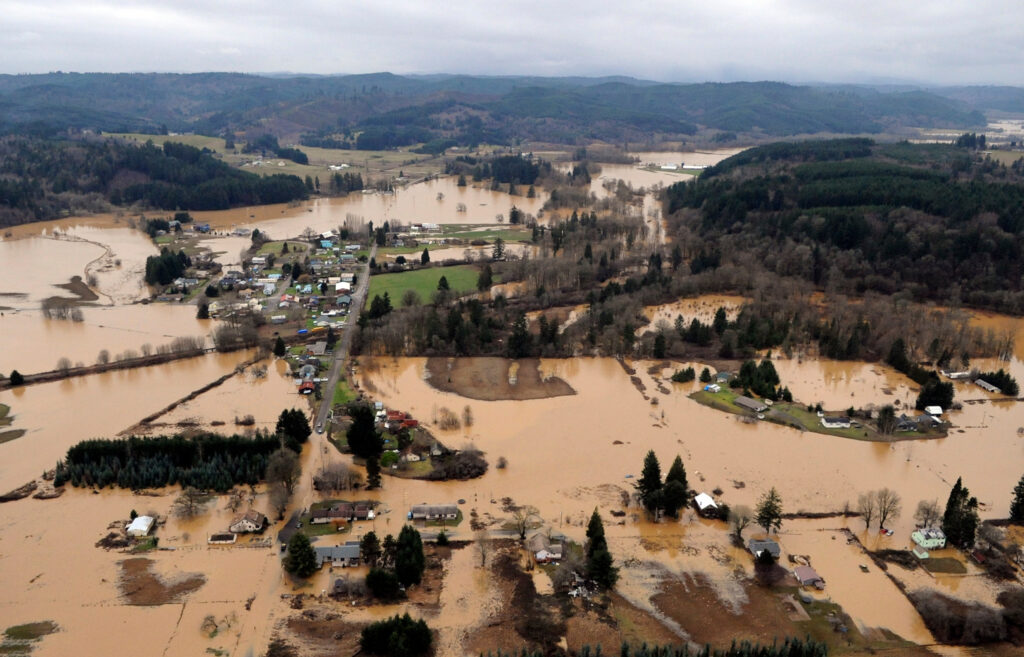
Rivers swelled after days of relentless rain driven by an atmospheric river stretching across the Pacific. Fields across the Pacific Northwest disappeared under brown water. Roads closed. Small towns were briefly cut off from the rest of the state.
In places like Sumas, Washington, a rural community on the U.S.-Canada border about 110 miles north of Seattle, residents waded to pharmacies and neighbors’ homes, reliving a trauma they had already endured just four years earlier.
For rural communities like Sumas, the December floods underscored a growing reality in American disaster response: local governments are being asked to do more as federal capacity thins, leaving volunteers with shovels and sandbags to shoulder much of the frontline work.
One Storm, Two Outcomes
Mount Vernon, about 70 miles south of Sumas on the edge of the Seattle metropolitan region, experienced the same storm very differently, as reported by Cascadia Daily News.
Mount Vernon and Sumas sit in river valleys shaped by glacial runoff and sustained by agriculture. Both are accustomed to flooding and lie within counties where rivers routinely test levees and roads. In December, both watched water levels climb as the same atmospheric river pushed the region toward record flooding.
In Mount Vernon, a city of about 35,000 along the Skagit River, residents strolled the downtown riverwalk on the morning of December 13, coffee cups in hand, as rolling brown water surged past under a bright blue sky. Just days earlier, local and state officials had been preparing for the Skagit to crest over the city’s flood wall and pour into downtown businesses. It never did. The river crested at a record 37.73 feet, but the wall held.
Later that morning, Sens. Patty Murray and Maria Cantwell walked the flood wall alongside Gov. Bob Ferguson and Mount Vernon Mayor Peter Donovan. Murray, who helped secure federal funding for the wall years earlier, called it “preventative infrastructure,” noting that during major floods two decades ago she had stood knee-deep in water where she now stood dry. Mayor Donovan said the wall had saved 225 downtown buildings and spared business owners not only physical damage but steep insurance losses.
But in Sumas, the scene was starkly different.
At the Sumas Advent Christian Church, the Whatcom Long Term Recovery Group coordinated hundreds of volunteers in a space that resembled a command center more than a sanctuary. Residents signed release forms, met with caseworkers, and were sent out with gloves, boots, and hazmat suits. English and Spanish flowed freely. Volunteers mucked out homes, cleaned crawl spaces to prevent mold, and distributed supplies. Over two days, an estimated 400 to 500 residents from Sumas and nearby Everson sought help.
For many, it was their second time gutting a flooded home.
The difference between Mount Vernon and Sumas was not geography, weather, or effort. It was investment. Mount Vernon’s flood wall reflects decades of planning, engineering expertise, and administrative capacity to secure federal mitigation funding. Sumas, like many small rural towns, lacks the financial base and staffing capacity to pursue comparable infrastructure, leaving it exposed when the river rises.
Together, the two cities offer a clear case study of how communities in the same region, facing the same storm, can emerge with dramatically different futures depending on access to long-term disaster investment.
Recovery by Hand
The growing burden of emergency preparedness and response falling on local communities, rather than federal agencies, is not accidental. It reflects a broader shift in federal disaster policy. As President Trump said in June, “We want to wean off of FEMA, and we want to bring it down to a state level.”
In recent years, FEMA’s capacity has tightened amid staffing shortages, leadership turnover, and workforce attrition. At the same time, federal policy has increasingly emphasized state and local responsibility for disaster preparedness, response, and resilience. Today, the federal role in emergency preparedness and response is framed as supplemental.
In theory, greater local control allows communities to tailor disaster response to local risks. In practice, it favors places with dense populations, strong tax bases, technical expertise, and political leverage. Rural communities, which often lack all three, are left more exposed.
Most states maintain disaster-specific reserves or rainy day funds, but these accounts are frequently insufficient, volatile, or already drawn down by recent disasters. As a result, reductions in federal support are likely to slow recovery, widen budget shortfalls, and deepen harm, especially in rural and disaster-prone regions.
The December floods in Washington illustrated how this shift plays out on the ground. With federal resources constrained, state and local governments naturally prioritize higher-population areas and critical economic centers, increasing pressure on small rural communities that already operate with limited staff and funding.
FEMA Under Attack
A 2025 Government Accountability Office report placed the delivery of federal disaster assistance on the federal government’s High-Risk List, citing the growing frequency and cost of disasters alongside long-standing staffing and coordination challenges at FEMA.
Earlier this year, Elon Musk’s Department of Government Efficiency publicly attacked FEMA over its funding of migrant housing, triggering a chain of political actions that froze billions of dollars in disaster recovery grants and disrupted aid to storm-battered communities nationwide.
After Musk falsely claimed FEMA had diverted disaster funds to house undocumented immigrants, the Trump administration issued orders restricting migrant-related spending. Those directives left FEMA staff without clear guidance, effectively halting payments to states, local governments, utilities, colleges, and nonprofits.
The funding freeze has produced tangible consequences for communities recovering from hurricanes, floods, tornadoes, and wildfires. Nonprofits assisting survivors in Florida, North Carolina, Hawaii, and elsewhere reported delayed reimbursements that threaten layoffs and service cuts just as new disaster seasons approach. Utilities and local governments, left waiting on FEMA payments, have been forced to borrow money to cover emergency repairs, shifting long-term costs onto residents.
These delays are compounded by a disaster landscape in which emergencies no longer arrive one at a time. FEMA increasingly enters peak disaster seasons with much of its workforce already deployed, while attrition and workforce reductions have further thinned the pool of experienced responders. The result is not the absence of federal aid, but slower and more limited delivery. Damage assessments take longer. Approvals stall. The agency relies more heavily on surge workers with limited disaster experience.
Large cities with well-funded emergency management departments can sometimes absorb these gaps. Rural communities like Sumas, operating with smaller staffs and fewer financial buffers, cannot.
Survivors Push Back
As policy debates unfold in Congress and the White House, disaster survivors have grown increasingly vocal.
Survivors from more than 10 states and Puerto Rico gathered on Capitol Hill in December to demand accountability from DHS leadership. They described months-long delays in assistance after deadly floods, wildfires, and storms and called for congressional hearings and direct engagement from federal officials.
“When FEMA cannot fully function, real people pay the price,” said Brandy Gerstner, a flood survivor from Texas whose family lost multiple homes and a business. Months after disaster struck, she said only a fraction of FEMA claims in her area had been approved.
Current and former FEMA employees have also spoken out, warning that staffing cuts and leadership instability put disaster victims at risk. Some whistleblowers say they faced retaliation after raising concerns.
Farms on the Front Line
The December floods were not an anomaly. Climate-driven extreme weather is becoming more frequent, leaving less time for recovery between disasters.
Nowhere is that clearer than on rural Washington’s farms.
Agriculture depends on floodplains for fertile soil, placing farms directly in harm’s way when rivers rise. Berry growers faced submerged fields and clogged irrigation systems. Repairs can cost thousands of dollars per acre before any revenue returns.
In the Snoqualmie Valley, farmer Gary Remlinger watched nearly five feet of water submerge his family’s strawberry fields, the worst flood he had seen in six decades.
On other farms, Farmworker advocates say they witnessed workers laboring in hazardous conditions. Lucy Madrigal of Community to Community reported seeing workers in muddy brussels sprout fields at one farm, while her colleague Isaac Cavazos said workers at another site continued operating near flooded areas to protect crops. Advocates said the incidents echoed painful memories from the 2021 floods, when a farmworker drowned while traveling to work, underscoring concerns that worker safety is again being put at risk during disasters.
Dairy farmers faced immediate logistical crises. Lactating cows must be milked every eight hours. Moving them requires power, equipment, clean water, and feed. Temporary milking operations are difficult to establish in the middle of a flood.
For many farmers, recovery depends on insurance, personal savings, and federal aid. When assistance is delayed, losses compound.
Who Carries the Weight
As waters recede across western Washington, recovery will take months or years. Fields must dry. Infrastructure must be repaired. Families and farms will navigate slow and complex assistance systems.
The larger question is already pressing. If FEMA continues shifting responsibility toward local governments without restoring capacity and investment, vulnerable rural communities will continue to carry disproportionate risk.
The December floods tested more than rivers and levees. They tested a disaster response system in transition.
For rural Washington, the message was clear: disasters are becoming more severe, while responsibility is becoming more local. Without renewed federal commitment, the weight of disaster response will continue to fall heaviest on the communities least equipped to carry it.

