

Poison ivy is found everywhere in the Contiguous United States. It often grows along rivers, lake fronts, and ocean beaches.
So if you are hiker or outdoor enthusiast it won’t belong before you come across it.
And even if you do everything you can to prevent exposure, like sticking to cleared pathways and wearing protective clothing, you still might find yourself experiencing a painful itchy rash.
That’s because poison ivy rash is caused by an allergic reaction to an oily resin called urushiol that collects on the leaves, stems and roots of the plant.
This oily urushiol is very sticky, so it easily attaches to your skin, clothing, tools, equipment and even pet’s fur. If the contaminated object isn’t cleaned, the urushiol on it can still cause a skin reaction years later.
According to the National Institute of Occupational Health & Safety, 50 micrograms—less than one grain of table salt!—of urushiol is enough to cause a rash in 80-90% of adults.
Signs and symptoms of a poison ivy rash include:
- Redness
- Itching
- Swelling
- Blisters
- Difficulty breathing
If you scratch a poison ivy rash, bacteria under your fingernails may cause the skin to become infected. So be sure to see your doctor if pus starts oozing from the blisters.
The reaction usually develops 12 to 48 hours after exposure.
How to Recognize Poison Ivy, Oak, and Sumac
Ever heard the phrase, “Leaves of three? Let it be.” That just might help you remember what poison ivy looks like.
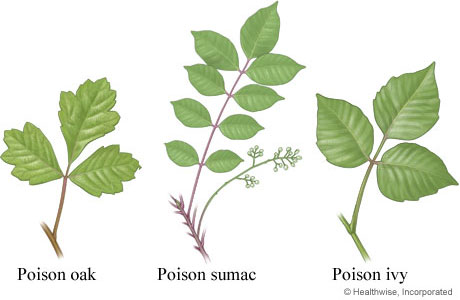
Poison ivy normally has three broad, spoon-shaped leaves or leaflets. Poison oak has leaves that look like oak leaves, usually three leaflets. And poison sumac has 7 to 13 leaflets on each leaf stem. The leaves have smooth edges and pointed tips. All these plants have small white, tan, cream, or yellow berries in the fall. Their berries can help distinguish them from harmless but similar plants.
And after the leaves fall off, these plants can sometimes be identified by the black color on areas where the urushiol) has been exposed to air.
What to do if you’re exposed to poison ivy
If you’re exposed to urushiol there is some good news. If you get the urushiol off your skin as soon as possible, you can prevent the rash. Just wash your skin within 30 minutes after exposure to urushiol, use soap, water, and wash cloth to gently wash off the harmful resin from your skin. Be sure to scrub under your fingernails too.
Don’t forget to clean any other items, such as outdoor gear, garden tools, shoes and even shoelaces, that came in contact with the plant oil. Wash your clothing promptly in warm soapy water — ideally in a washing machine while taking care to handle contaminated clothing carefully so that you don’t transfer the urushiol to yourself.
Jim Brauker, Ph.D., spent 25 years as a biomedical scientist studying skin inflammation. In this video, he explains that while poison ivy prevention is key, urushiol removal is key to preventing poison ivy rash.
Watch: How to never have a serious poison ivy rash again